Our Blog
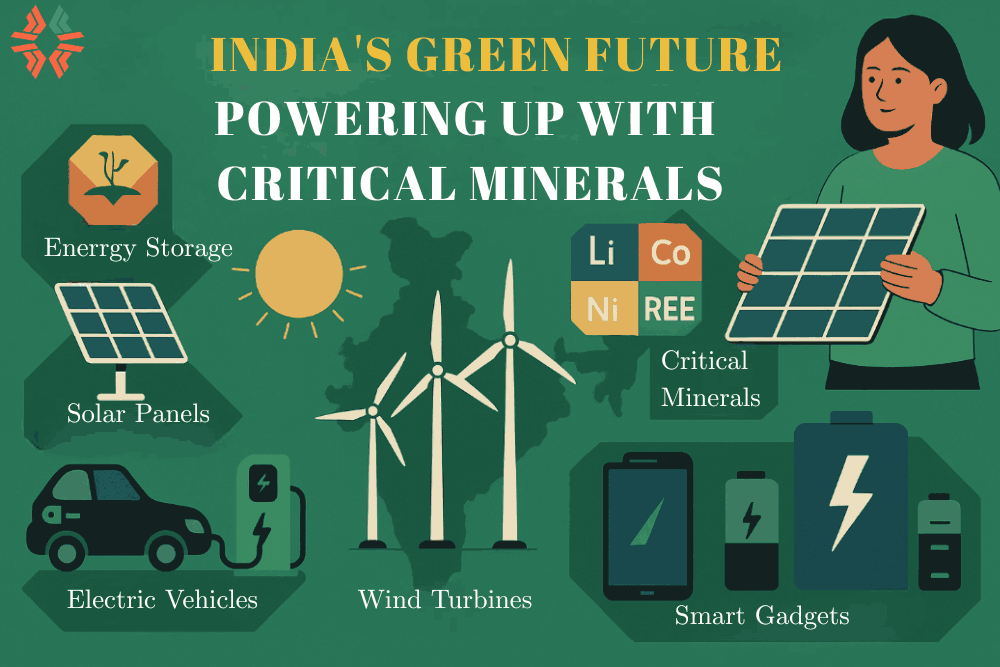
Indias Green Future Powering Up with Critical Minerals
Ever thought about what makes your smartphone tick, or what powers those sleek electric cars silently zipping past? It's not just big batteries; it's a whole bunch of special ingredients called critical minerals. Things like Lithium, Cobalt, Nickel, and those tricky-to-find Rare Earth Elements.
Why are these "Critical" anyway?
Imagine building a house without cement or steel. Impossible, right? Well, critical minerals are like that for our modern, green economy. They're essential for:
- Solar Panels: So we can harness more of that brilliant Indian sunshine.
- Wind Turbines: To capture the power of the wind.
- Electric Vehicles (EVs): Making our commutes cleaner and quieter.
- Smart Gadgets: Yes, even the device you're reading this on!
- Energy Storage: Think huge batteries that store power for when the sun isn't shining or the wind isn't blowing.
Why Critical Minerals Matter
- Foundation of Modern Tech: Critical minerals like lithium, cobalt, nickel, and rare earth elements are indispensable for batteries, electronics, and green technologies.
- Supply Chain Vulnerabilities: Global supply is concentrated in a few nations, leading to significant dependence and strategic risks for importing countries.
The National Critical Mineral Mission (NCMM)
Our government, through initiatives like the National Critical Mineral Mission (NCMM) (which kicked off in 2025), is making sure we're not left behind in this global race. The Ministry of Mines has even identified 30 specific critical minerals that are super important for our growth and security. Think of it as a grocery list for a future-ready India!
This isn't just talk. We're putting serious money where our mouth is – we're looking at an outlay of Rs. 34,300 crore over seven years! That's a huge investment to ensure we have a steady supply.
India's Untapped Potential (Key Discoveries & Reserves)
- 30 Critical Minerals Identified: Essential for India's economic growth and national security.
- Lithium: Estimated 5.9 million tonnes of reserves in Jammu & Kashmir, with larger potential in Rajasthan's Degana.
- Rare Earth Elements (REE): Substantial deposits, including 230 million tonnes of REE ore, found in states like Andhra Pradesh, Karnataka, Odisha, and Kerala.
- Graphite: Significant reserves reported at 9 million tonnes.
- Ilmenite (Titanium): Accounts for 11% of global deposits.
1. ₹34,300 Crore National Mission Launched
- Outlay: ₹16,300 Cr (Govt) + ₹18,000 Cr (PSU)
- Target: 1,200 exploration projects by 2031
2. Major Mineral Discoveries in India
|
Mineral |
Location |
Quantity |
|
Lithium |
Jammu & Kashmir |
5.9 million tonnes |
|
Vanadium |
Arunachal Pradesh |
13.7 million tonnes |
|
Graphite |
Arunachal Pradesh |
17.9 million tonnes |
|
Rare Earths |
Jharkhand, Tamil Nadu, Kerala |
Significant deposits |
3. Import Dependency (2024)
- 100% of lithium, cobalt and nickel are imported
- 91% of rare earth processing is done by China
- India imported ₹8,500 Cr worth of rare-earth magnets in 2023–24
Vyankatesh Group of Companies: Strategic Role
As a pioneer in metal recovery and sustainable processing, Vyankatesh Group aligns perfectly with India’s critical mineral ambitions.
Our Capabilities:
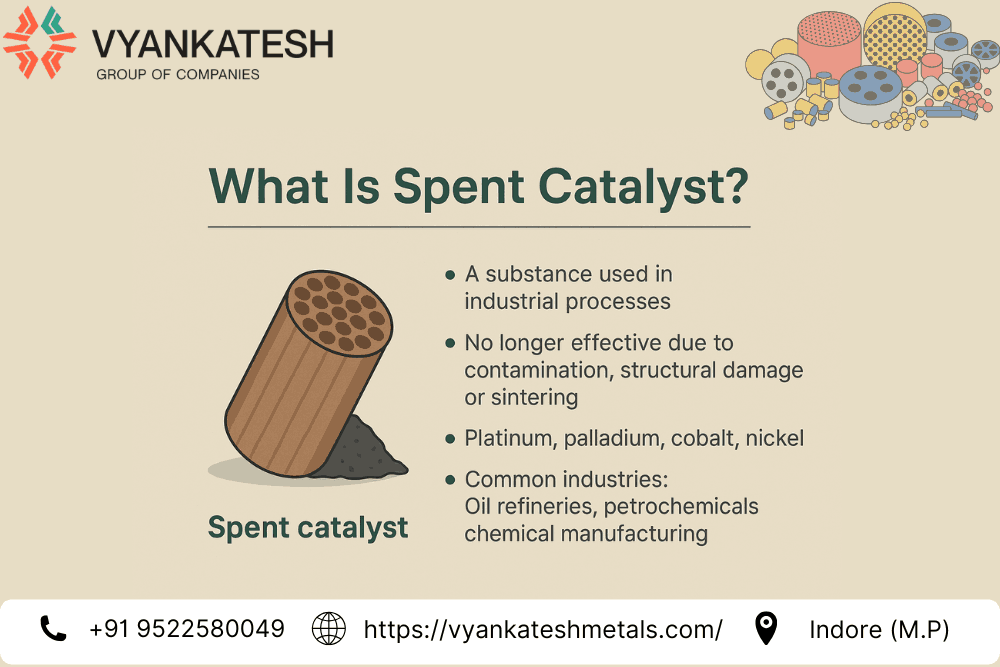
- Spent catalyst recovery from petrochemical & refinery industries
- Expertise in cobalt, molybdenum, vanadium, and rare metals
- Processing facilities for bulk recovery & recycling
- R&D on mineral waste valorization
- Collaboration-ready for Government & Global mineral partnerships
India’s critical mineral mission is not just a policy shift — it’s a strategic revolution. With ₹34,300 crore dedicated to this transformation, India is eyeing global leadership in the green economy.
Vyankatesh Group of Companies is ready to power this revolution by leveraging decades of metallurgical excellence, recovery processes, and global partnerships. We believe in building a sustainable, Atmanirbhar Bharat powered by innovation and integrity.
Other Blogs